
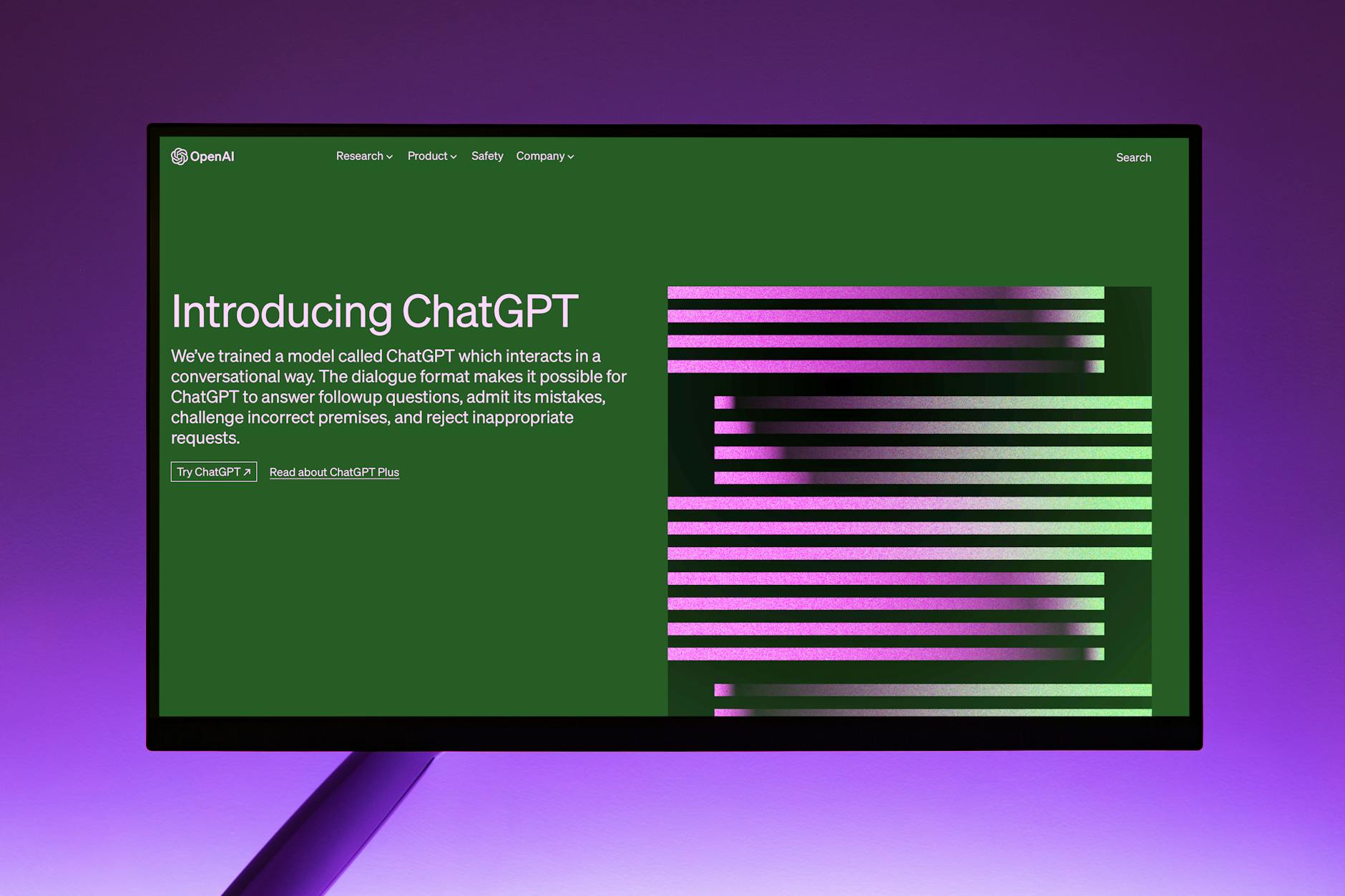
ChatGPT in 2026: Still the King, or Losing Ground?
ChatGPT remains the most capable and versatile AI chatbot available in 2026 for most users — but the gap between it and competitors like Claude, Gemini, and Grok has narrowed significantly. If you're deciding whether to subscribe or switch, this ChatGPT review will give you a straight answer based on real-world use.
OpenAI's flagship model has evolved dramatically over the past two years. With the rollout of GPT-4o and subsequent updates, ChatGPT now handles voice, vision, file analysis, web browsing, and deep reasoning within a single interface. It's not perfect, and it's not cheap — but for sheer breadth of capability, it still sits at the top of our rankings at Tech Realm.
What's New in ChatGPT 2026?
If you haven't used ChatGPT since 2024, you'll notice meaningful improvements across the board. Here's what's changed:
- Improved reasoning: The o-series models (o3, o4-mini) bring significantly stronger logical reasoning, math, and multi-step problem solving compared to earlier versions.
- Memory across conversations: ChatGPT now remembers your preferences, past projects, and context between sessions — making it feel genuinely personal over time.
- Expanded context window: Handling much longer documents and conversations without losing coherence is now standard, even on mid-tier plans.
- Deeper tool integration: Canvas for writing and coding, real-time web search, image generation via DALL·E, and Python execution are all baked in — no plugin juggling required.
- Voice mode maturity: Advanced Voice Mode is now genuinely useful for hands-free brainstorming, language practice, and quick research queries.
Who Is ChatGPT Best For?
Before diving into the full ChatGPT review, it helps to know whether this tool actually fits your workflow. Based on extensive testing, here's who gets the most value:
Writers and Content Creators
ChatGPT's Canvas feature has transformed how writers interact with it. You can draft, edit, and iterate on long-form content inside a dedicated writing environment without losing context. It handles tone shifts, structural rewrites, and style matching better than most competitors. For bloggers, copywriters, and novelists, it's a legitimate co-author rather than just an autocomplete engine.
Developers and Coders
Code generation and debugging are among ChatGPT's strongest suits. It supports dozens of languages, explains code clearly, and catches errors with impressive accuracy. The o-series models are particularly strong at algorithmic reasoning. That said, GitHub Copilot still edges it out for deeply integrated IDE workflows.
Researchers and Students
With real-time web search and the ability to analyze uploaded PDFs, research papers, and datasets, ChatGPT has become a powerful research assistant. It can summarize, compare, and synthesize information quickly — though you should always verify citations, as hallucinations still occur.
Business Professionals
From drafting emails and summarizing meeting notes to building spreadsheet formulas and creating presentations, ChatGPT handles office productivity tasks efficiently. The memory feature is especially useful here, letting it learn your company's tone and terminology over time.
ChatGPT Pricing in 2026
Here's a quick breakdown of current plan tiers:
- Free: Access to GPT-4o (with limits), basic web search, limited memory. Good for casual use.
- ChatGPT Plus ($20/month): Full GPT-4o access, o3-mini reasoning, extended limits, Canvas, DALL·E image generation, and Advanced Voice.
- ChatGPT Pro ($200/month): Unlimited o3 access, highest-priority compute, and early access to new features. Designed for heavy professional use.
- ChatGPT Team and Enterprise: Collaborative workspaces, admin controls, and data privacy guarantees for businesses.
For most users, ChatGPT Plus at $20/month offers the best value. The Pro tier is hard to justify unless you're using the o3 reasoning model intensively every single day.
Honest Pros and Cons
What ChatGPT Does Well
- Exceptional versatility — writing, coding, analysis, image generation, voice, all in one place
- Consistently high-quality writing assistance with nuanced tone control
- Strong reasoning performance on the o-series models
- Reliable web search integration with source citations
- Persistent memory that genuinely improves over time
- Massive community, plugin ecosystem, and third-party integrations
Where ChatGPT Falls Short
- Hallucinations still happen. It can confidently produce incorrect facts, especially on niche topics. Always verify critical information.
- The free tier is increasingly limited. To get real value in 2026, you almost certainly need a paid plan.
- Context window, while improved, still has limits. Very long documents can cause earlier details to slip.
- Claude 3.5 beats it on nuanced long-form writing. For book-length or highly stylized content, Anthropic's model feels more natural.
- Can be overly cautious. Safety filters occasionally refuse benign requests or add unnecessary disclaimers.
- Cost at Pro tier is hard to justify for most individual users.
ChatGPT vs. The Competition in 2026
The best AI chatbot debate is more competitive than ever. Here's how ChatGPT stacks up against its main rivals:
- vs. Claude (Anthropic): Claude edges ChatGPT on nuanced prose, longer context handling, and following complex instructions precisely. ChatGPT wins on tool integration and multimodal capability.
- vs. Gemini (Google): Gemini Ultra has deep Google ecosystem integration (Docs, Gmail, Search) that's hard to beat if you live in Google's world. ChatGPT is more capable as a standalone creative and technical tool.
- vs. Grok (xAI): Grok offers real-time X/Twitter data access and a less filtered personality. It's interesting but inconsistent. ChatGPT is more reliable for professional tasks.
- vs. Copilot (Microsoft): Microsoft's Copilot is excellent for Office 365 integration. ChatGPT is more powerful outside of Microsoft's ecosystem.
Bottom line on competition: No single AI chatbot dominates every category in 2026. But ChatGPT is the only one that comes close to winning across all of them simultaneously.
Real-World Performance: What Our Testing Found
At Tech Realm, we ran ChatGPT through a standardized battery of tasks over 60 days. Key takeaways:
- Writing tasks: Scored highest on blog posts, marketing copy, and email drafting. Lost points on creative fiction where Claude felt more human.
- Coding tasks: Solved 87% of test problems correctly on the first attempt. Excelled at debugging and explanation.
- Research tasks: Strong on summarization; required fact-checking on approximately 1 in 8 factual claims.
- Reasoning tasks: o3 model performed exceptionally well on logic puzzles, math, and multi-step planning.
- Voice interaction: Natural, low-latency, and genuinely useful — a real improvement over 2024.
Verdict: Should You Use ChatGPT in 2026?
After a thorough ChatGPT review, our position is clear: ChatGPT is still the best all-around AI chatbot in 2026 for users who want one tool that handles writing, coding, research, and creative work without switching between apps.
It's not the absolute best at any single specific task — Claude writes more elegantly, Gemini integrates better with Google Workspace, and specialized coding tools edge it out in the IDE. But no competitor matches its combination of capability, reliability, and breadth.
Who should subscribe to ChatGPT Plus: Writers, developers, researchers, and business professionals who use AI daily and want the most versatile tool available.
Who might look elsewhere: Users deeply embedded in Google's ecosystem (try Gemini), those who prioritize long-form creative writing above all else (consider Claude), or anyone who only needs occasional AI help (the free tier or a cheaper alternative may suffice).
At $20/month for Plus, it's a fair price for what you get. Just go in with realistic expectations — it's a powerful assistant, not an infallible oracle.
Frequently Asked Questions
Is ChatGPT still the best AI chatbot in 2026?
Yes, for most users ChatGPT remains the best AI chatbot in 2026 due to its combination of writing quality, coding ability, multimodal tools, and broad versatility. However, Claude and Gemini are strong alternatives depending on your specific needs.
Is ChatGPT free in 2026?
ChatGPT offers a free tier with access to GPT-4o at limited usage levels. For full access to advanced models, Canvas, image generation, and higher usage limits, you'll need ChatGPT Plus at $20/month or higher.
What is the difference between ChatGPT Plus and ChatGPT Pro?
ChatGPT Plus ($20/month) gives you full access to GPT-4o and o3-mini with generous limits. ChatGPT Pro ($200/month) adds unlimited access to the full o3 reasoning model and priority compute. Most users will find Plus sufficient.
Does ChatGPT still hallucinate in 2026?
Yes, hallucinations still occur in ChatGPT 2026, particularly on niche or highly specific factual queries. The rate has improved compared to earlier versions, but you should always verify important facts from independent sources.
How does ChatGPT compare to Claude in 2026?
Claude (by Anthropic) tends to produce more nuanced, natural-sounding long-form writing and handles very long contexts slightly better. ChatGPT outperforms Claude on multimodal tasks, tool integration, coding breadth, and overall feature variety.
Can ChatGPT browse the internet in 2026?
Yes. ChatGPT includes real-time web search on both free and paid plans in 2026, with source citations included. It's particularly useful for current events, product research, and fact-checking recent information.