
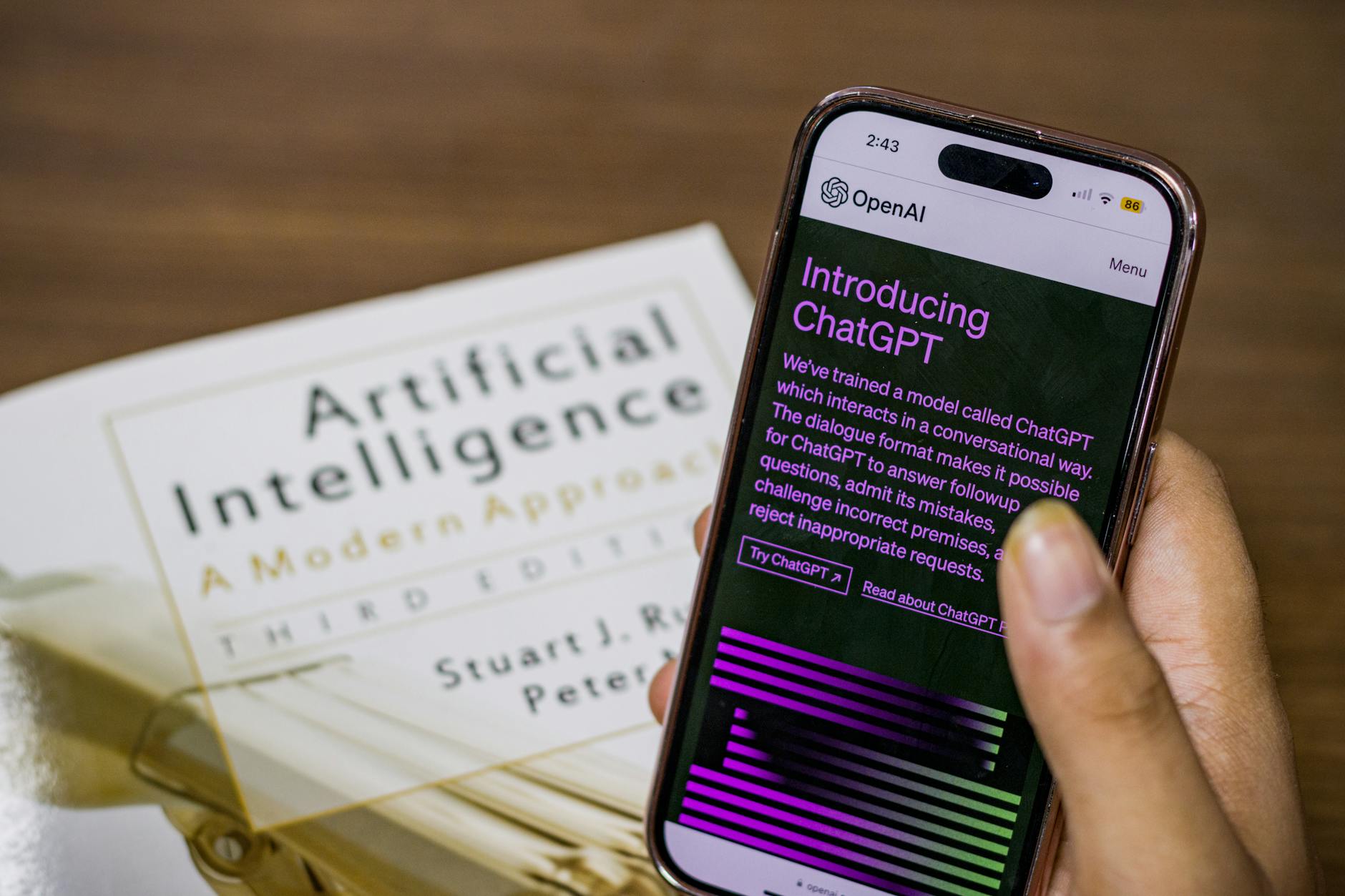
ChatGPT Review 2026: The Quick Verdict
ChatGPT remains one of the best AI chatbots available in 2026, but it no longer holds an unchallenged lead. With strong competition from Google Gemini, Anthropic's Claude, and others, OpenAI has had to keep innovating — and for most users, those innovations still make ChatGPT the go-to choice. That said, whether it's the right tool for you depends heavily on your specific needs, budget, and workflow.
We've spent considerable time testing ChatGPT's latest capabilities across writing, coding, research, and everyday productivity tasks. Here's everything you need to know before committing to a free or paid plan.
What Is ChatGPT in 2026?
ChatGPT is OpenAI's flagship conversational AI, now powered by the GPT-4o series of models (with access to more advanced reasoning models on paid tiers). Since its explosive debut in late 2022, it has grown into a full-featured AI platform — not just a chatbot, but an assistant capable of browsing the web, generating images, running code, analyzing documents, and integrating with third-party apps.
In 2026, ChatGPT is available in the following tiers:
- Free: Access to GPT-4o (with usage limits), basic web browsing, and image generation
- Plus ($20/month): Higher usage caps, priority access to new features, and access to advanced reasoning models
- Pro ($200/month): Unlimited access to the most powerful models, ideal for heavy professional use
- Team & Enterprise: Collaborative workspaces, admin controls, and enterprise-grade security
Key Features: What ChatGPT Can Do in 2026
Advanced Reasoning and Writing
ChatGPT's writing capabilities remain best-in-class for most use cases. Whether you're drafting a marketing email, writing a technical report, or brainstorming creative fiction, the output is coherent, contextually aware, and stylistically flexible. The model now does a noticeably better job of maintaining a consistent tone across long documents — a previous weak spot.
The reasoning models available on Plus and Pro tiers take things further, tackling complex multi-step problems with structured, transparent thinking. This makes them particularly useful for legal analysis, financial modeling, and academic research.
Web Browsing and Real-Time Information
ChatGPT can browse the web in real time, which was a major gap in earlier versions. In 2026, this feature is more reliable and faster than it used to be — though it still occasionally struggles to synthesize information from multiple sources as cleanly as a dedicated research tool like Perplexity AI.
Image Generation (DALL·E Integration)
Image generation is built directly into the chat interface. The quality is impressive for concept art, marketing visuals, and quick mockups. However, Midjourney and Adobe Firefly still outperform it for photorealistic or highly stylized professional imagery. For casual or business users who want images without switching tools, it's a genuine convenience win.
Code Interpreter and Data Analysis
Upload a spreadsheet, a PDF, or a dataset and ChatGPT can analyze it, generate charts, write Python scripts, and explain the results in plain English. This is one of the most genuinely useful features for non-technical professionals — it bridges the gap between data and decision-making without requiring any coding knowledge.
Memory and Personalization
ChatGPT's memory feature has matured significantly. It can now remember your preferences, communication style, ongoing projects, and background context across conversations — making interactions feel progressively more personalized over time. You can review and delete memories at any time, which is a reassuring privacy control.
Custom GPTs and Third-Party Integrations
The GPT Store allows users to access or build custom AI assistants tailored to specific workflows — from customer support bots to coding assistants. Integration with tools like Zapier, Slack, and Microsoft 365 means ChatGPT can slot into existing business processes with relatively low friction.
ChatGPT 2026: Pros and Cons
✅ What ChatGPT Does Well
- Versatility: Writing, coding, research, image generation, data analysis — all in one interface
- Natural conversation: Responses feel fluid, nuanced, and contextually intelligent
- Ecosystem depth: Custom GPTs, plugins, and integrations add serious extensibility
- Continuous improvement: OpenAI ships updates frequently; the product today is noticeably better than six months ago
- Free tier: Still one of the most generous free offerings among top AI chatbots
- Memory: Persistent personalization improves over time with use
❌ Where ChatGPT Falls Short
- Hallucinations still happen: Even in 2026, ChatGPT can confidently state incorrect information. Always verify critical facts from authoritative sources.
- Cost at higher tiers: The $200/month Pro plan is hard to justify for casual users, and even Plus pricing adds up
- Deep research limitations: For intensive academic or investigative research, specialized tools still have an edge
- Image quality ceiling: Doesn't match dedicated image generation platforms for professional creative work
- Privacy concerns: Unless you're on an Enterprise plan, conversations may be used for model training by default
Who Should Use ChatGPT in 2026?
Based on our testing, here's who gets the most value from ChatGPT:
- Content creators and writers — drafting, editing, ideating, and repurposing content at scale
- Developers — debugging code, writing boilerplate, explaining documentation
- Business professionals — summarizing reports, drafting communications, analyzing data
- Students and researchers — understanding complex topics, structuring arguments, literature review assistance
- Small business owners — handling customer FAQs, writing product descriptions, marketing copy
If you primarily need deep, citation-heavy academic research, Claude's larger context window and more cautious sourcing may serve you better. If image generation is your primary use case, a dedicated tool will outperform ChatGPT. But for general-purpose productivity across multiple domains, ChatGPT is still the benchmark.
ChatGPT vs. The Competition in 2026
The AI chatbot market is more competitive than ever. Here's a quick honest comparison:
- ChatGPT vs. Claude (Anthropic): Claude edges ahead on long-document analysis and nuanced writing with a more cautious, less "hallucinatory" approach. ChatGPT wins on ecosystem breadth and versatility.
- ChatGPT vs. Gemini (Google): Gemini integrates more deeply with Google Workspace and excels at real-time search. ChatGPT has a more polished conversational experience and better third-party integrations.
- ChatGPT vs. Perplexity: Perplexity is a better dedicated research and citation tool. ChatGPT is far more versatile beyond research tasks.
Bottom line on competition: No single AI chatbot wins every category in 2026. ChatGPT wins the "most useful for the most people" category — but your mileage may vary based on your primary use case.
Pricing: Is ChatGPT Worth It?
The free tier offers remarkable value and is genuinely useful for light to moderate use. The Plus plan at $20/month is a reasonable investment for professionals who use AI tools daily. The Pro plan at $200/month is a hard sell for most individuals — it makes sense for power users and businesses where AI is central to operations.
For teams, the Team plan ($25–30/user/month) offers good value with shared workspaces and data privacy protections not available on individual plans.
Verdict: Is ChatGPT Still the Best AI Chatbot in 2026?
For most users, yes — ChatGPT is still the best AI chatbot in 2026. Its combination of conversational quality, feature breadth, continuous improvement, and a solid free tier keeps it ahead of the pack for general-purpose use. It's not perfect: hallucinations remain a real concern, the top-tier pricing is steep, and specialist tools beat it in narrow domains.
But if you're looking for one AI assistant to handle writing, research, coding, data analysis, and day-to-day productivity — ChatGPT is still the one to beat. Start with the free tier, and upgrade to Plus if you hit the limits regularly. That's the honest recommendation from us at Tech Realm.
Frequently Asked Questions
Is ChatGPT free to use in 2026?
Yes. ChatGPT offers a free tier with access to GPT-4o, basic web browsing, and image generation — though with usage limits. Paid plans (Plus, Pro, Team, Enterprise) unlock higher limits and more powerful models.
How accurate is ChatGPT in 2026?
ChatGPT has improved significantly in accuracy, but it still produces hallucinations — confident-sounding incorrect information. It's best used as a starting point or productivity tool, not as a sole source of truth for critical decisions. Always verify important facts independently.
Is ChatGPT better than Google Gemini in 2026?
It depends on your use case. Gemini integrates better with Google Workspace and has strong real-time search capabilities. ChatGPT has a more polished conversational experience and a richer third-party ecosystem. For general-purpose use, most users still prefer ChatGPT.
Can ChatGPT browse the internet in 2026?
Yes. ChatGPT supports real-time web browsing across free and paid plans, though the depth and speed of research can vary. For intensive, citation-heavy research, dedicated tools like Perplexity AI may serve you better.
Is ChatGPT safe and private to use?
On free and Plus plans, conversations may be used by OpenAI for model training by default (you can opt out in settings). For stronger data privacy guarantees, the Team and Enterprise plans offer additional protections. Avoid inputting sensitive personal or confidential business data on personal-tier plans.
What is the best ChatGPT plan for professionals?
For most professionals, the Plus plan at $20/month offers the best balance of capability and cost. The Pro plan ($200/month) is best reserved for heavy daily users or businesses where AI is a core workflow tool. Teams should consider the Team plan for shared access and privacy controls.